


When Canadian organizations evaluate VoIP, most of the conversation centers on platforms, pricing, and providers. The devices (the actual phones with VoIP compatibility that your team uses every day), often get decided last. That’s a mistake.
Getting the platform right and the hardware wrong creates friction that undermines the entire deployment and ends up being counter-effective. Phones with VoIP technology come in several forms, and the right choice depends on how your organization operates, how many users you’re equipping, and what your team actually needs to do their jobs effectively.
This guide is written by SE Telecom (Canadian VoiP and UCaaS provider) for IT managers, operations leaders, and decision-makers at mid-market and enterprise organizations evaluating VoIP hardware as part of a broader communication infrastructure upgrade.
What Are Phones with VoIP
VoIP phones are devices that transmit voice calls over the internet rather than traditional phone lines. Unlike analog phones connected to a PBX, phones with VoIP connect directly to your hosted cloud platform (whether that’s Clear Clouds, RingCentral, 8×8, or Microsoft Teams) and handle calls through your organization’s internet connection.
The term covers more than just desk phones. VoIP-compatible devices include IP desk phones, softphone applications on laptops and desktops, mobile apps on smartphones, and conference room devices. Each serves a different use case, and most enterprise deployments use a combination of all of them.
Types of Phones with VoIP
IP Desk Phones — Physical handsets that connect to your VoIP platform over your network. These are the most familiar form factor for office-based staff and remain the preferred choice for roles with high inbound call volume like reception, customer service, and administrative teams.
Softphones — Software applications installed on a laptop or desktop that replicate the functionality of a desk phone. No hardware required. Ideal for hybrid workers, remote employees, and organizations looking to reduce device costs across large teams.
Mobile VoIP Apps — Smartphone applications that extend your business phone system to mobile devices. Field-based teams, executives, and remote staff can make and receive calls on their business number from anywhere with a data connection.
Conference Room Phones — Dedicated devices designed for boardrooms and meeting spaces. Built for multi-participant calls with wide-range microphone pickup and HD audio clarity.
Do You Actually Need New Hardware
Not necessarily – and this is one of the most common misconceptions when organizations evaluate switching to VoIP for the first time.
Many existing IP desk phones are compatible with modern hosted VoIP platforms and can be reprovisioned to work with a new provider without replacement. If your organization already has Yealink, Poly, Cisco, or Grandstream devices on desks, there’s a reasonable chance they can be carried forward into a new deployment.
For organizations that are truly starting fresh or replacing aging analog hardware, new device procurement is straightforward. Most platforms support a wide range of certified hardware, and SE Telecom handles provisioning as part of the deployment process.
The most cost-effective approach for large organizations is often a hybrid – reprovisioning compatible existing devices, supplementing with new hardware where needed, and deploying softphones for remote and hybrid staff who don’t need a physical device at all.
Phones with VoIP: 5 Devices Canadian Businesses Are Using
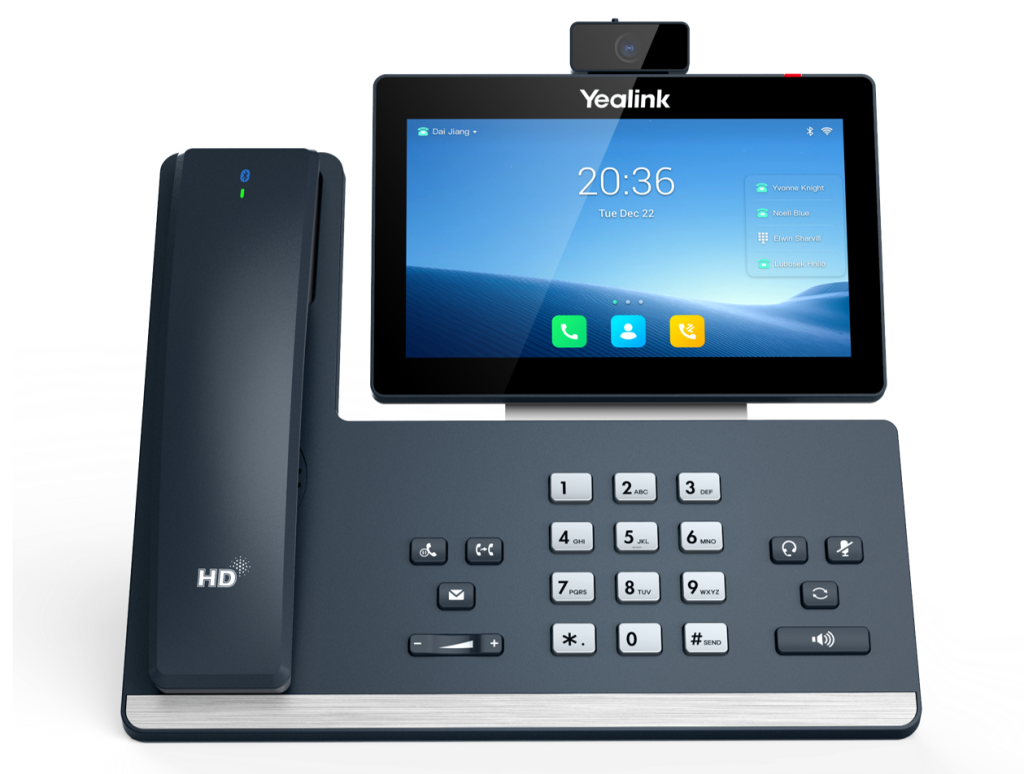
Yealink T54W One of the most widely deployed business VoIP phones in Canada. Colour touchscreen, built-in WiFi and Bluetooth, supports up to 16 lines. A reliable choice for mid-market organizations equipping office-based teams across multiple locations.
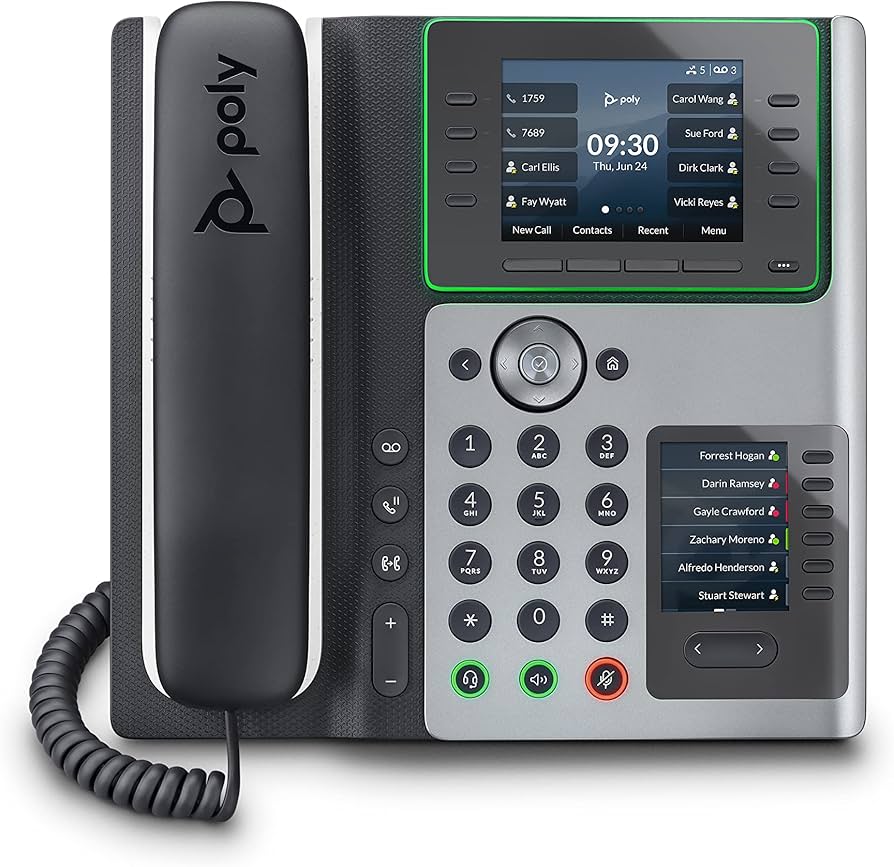
Poly Edge E400 A mid-range IP desk phone with a colour display built for busy professionals. Straightforward to provision and compatible with most hosted VoIP platforms including Clear Clouds and RingCentral. Popular with professional services and healthcare organizations.
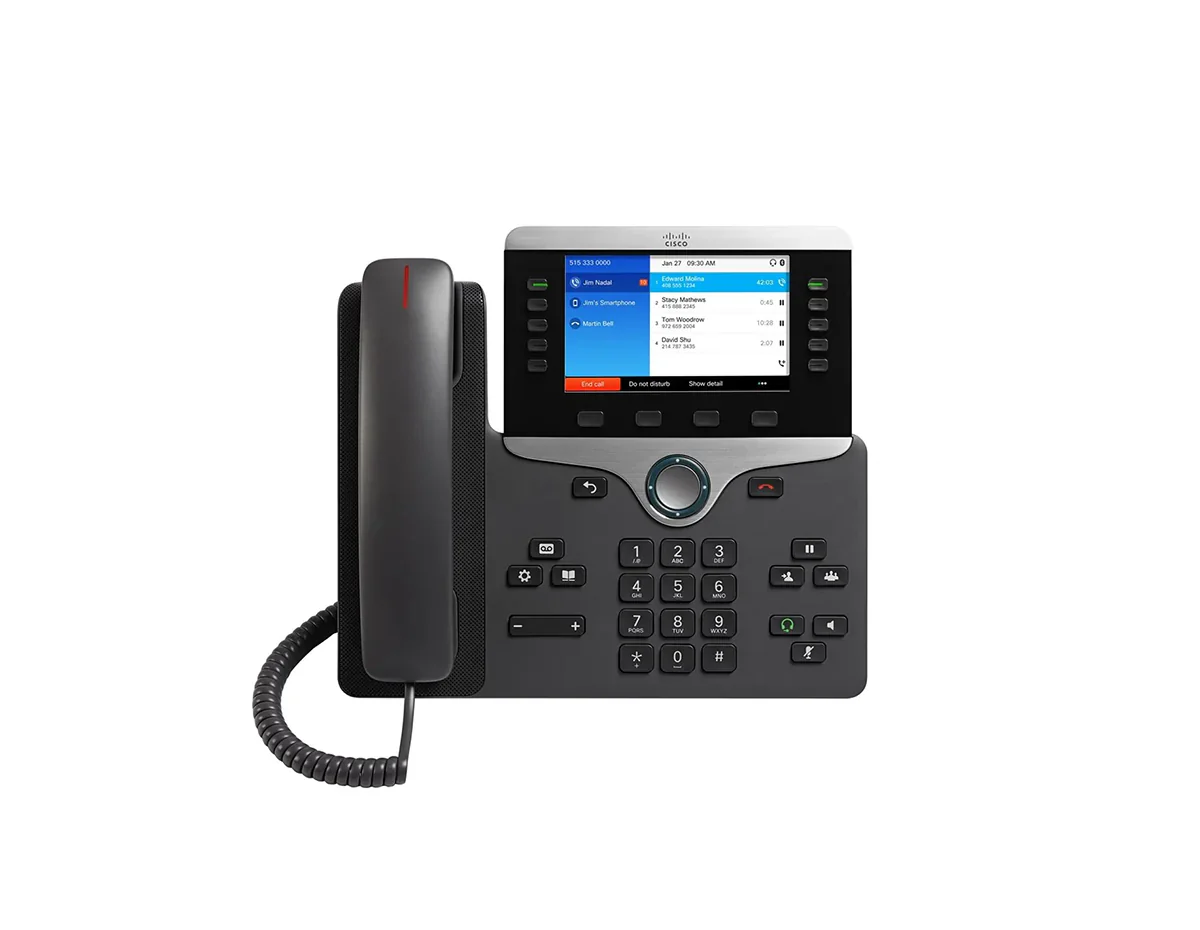
Cisco 8851 Enterprise-grade desk phone with HD audio and Gigabit ethernet. Common in larger corporate environments, healthcare networks, and organizations with complex call routing requirements. Wide platform compatibility makes it a solid long-term hardware investment.
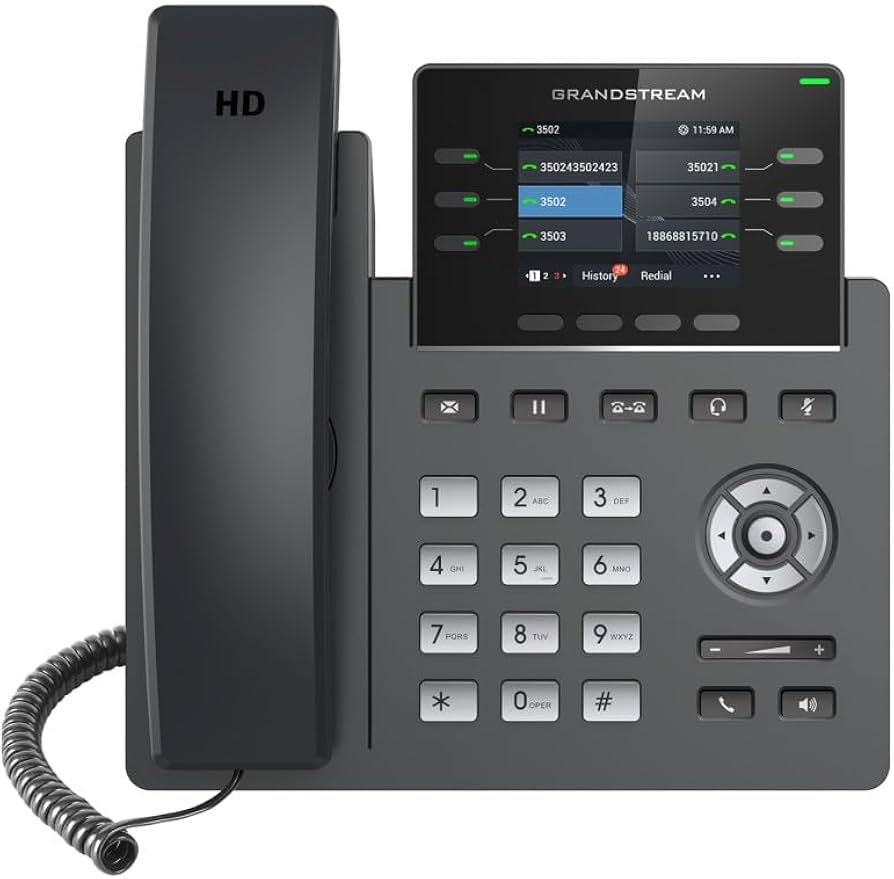
Grandstream GRP2613 A reliable, cost-effective IP phone well suited for organizations equipping large teams across multiple sites. Easy centralized provisioning and solid call quality make it a practical choice for multi-location rollouts where per-unit cost matters.
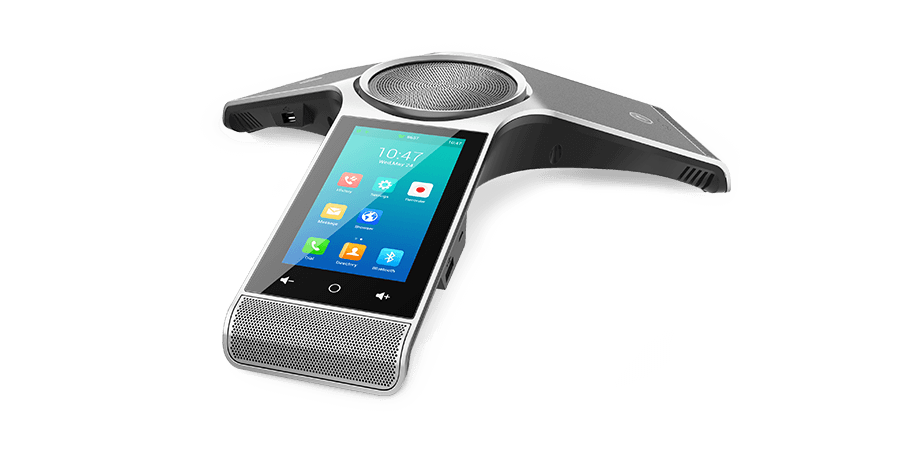
Yealink CP960 — Conference Room Phone Designed for boardrooms and meeting spaces. Features 360-degree microphone pickup, a touchscreen interface, and integration with Teams and other UCaaS platforms. The right device for enterprise organizations that need professional audio quality in shared meeting environments.
Cost of Phones with VoIP
Hardware costs vary significantly depending on device category and volume:
Entry-level IP desk phones — $80–$150 CAD per unit. Suitable for standard office roles with moderate call volume.
Mid-range IP desk phones — $150–$300 CAD per unit. Better displays, more line keys, and additional features for power users and reception desks.
Enterprise desk phones — $300–$500+ CAD per unit. HD audio, advanced integrations, and broader platform compatibility for complex environments.
Conference room phones — $400–$800 CAD per unit depending on room size and feature requirements.
Softphones — Typically included in your monthly platform subscription at no additional hardware cost. For organizations with large remote or hybrid workforces, leaning on softphones rather than physical devices can significantly reduce upfront hardware spend.
For mid-market organizations deploying 50–150 users, hardware budgets typically run $10,000–$30,000 CAD depending on device mix. Enterprise rollouts at 150–500+ users are more negotiable and often include volume pricing from hardware vendors.
Phones with VoIP: What Mid-Market and Enterprise Organizations Use
Use case determines device choice more than budget in most deployments:
Reception and front desk — IP desk phones with multiple line keys and a clear display. High inbound volume roles benefit from physical handsets over softphones.
Office-based professionals — Mid-range IP desk phones or softphones depending on preference. Many organizations offer both and let users choose.
Remote and hybrid staff — Softphone applications on laptops combined with mobile VoIP apps. No physical hardware needed, full business phone functionality from anywhere.
Field-based and mobile teams — Mobile VoIP apps on existing smartphones. Energy companies, logistics operations, and healthcare organizations with field staff rely heavily on this model.
Executive and leadership teams — Premium desk phones or softphones depending on work style. Conference room phones for boardroom environments.
How SE Telecom Handles Device Selection
SE Telecom takes a platform-agnostic approach to both software and hardware. Rather than pushing a specific device brand, SE Telecom assesses your organization’s use cases and recommends hardware that fits your deployment — whether that’s Clear Clouds, RingCentral, or 8×8.
That means:
- Hardware compatibility assessment — SE Telecom reviews your existing devices before recommending new hardware
- Centralized provisioning — devices are configured and ready to deploy before they reach your team
- Platform flexibility — recommended hardware works across supported platforms so you’re not locked into a single vendor ecosystem
- Canadian hosting available — Clear Clouds keeps your data in Canada
- No forced long-term contracts — flexibility as your organization’s headcount and locations evolve
FAQ: Phones with VoIP
Does SE Telecom help organizations choose the right VoIP phones? Yes. SE Telecom assesses your existing hardware, your team’s use cases, and your platform of choice before recommending devices. The goal is to right-size hardware for your deployment, not oversell it.
Does SE Telecom support Yealink, Poly, Cisco, and Grandstream devices? Yes. SE Telecom works with all major IP phone brands and handles provisioning and configuration as part of every deployment. Devices arrive ready to use, no burden on your IT team.
Do I need to buy new phones when switching to SE Telecom? Not necessarily. SE Telecom reviews your existing devices as part of the deployment assessment. Compatible hardware gets reprovisioned, new devices are only recommended where actually needed.
Which platforms do SE Telecom’s VoIP phones work with? SE Telecom supports Clear Clouds, RingCentral, and 8×8, as well as Microsoft Direct Routing. Hardware recommendations are made based on which platform best fits your organization, devices are provisioned accordingly.
Does SE Telecom offer softphone options instead of physical hardware? Yes. Softphone applications are included with most platform deployments through SE Telecom. Many organizations use a mix — desk phones for office-based staff, softphones for hybrid and remote teams, and mobile apps for field-based employees.
Is SE Telecom’s VoIP hardware setup secure enough for regulated industries? Yes. SE Telecom configures devices with encryption and secure communications management across all supported platforms. Healthcare, legal, financial services, and logistics organizations across Canada rely on SE Telecom’s deployments daily.
How long does hardware setup take with SE Telecom? SE Telecom handles centralized provisioning so devices are configured before they reach your team. For most mid-market deployments, hardware is ready to go as part of the phased rollout (no extended downtime).
→ Connect with SE Telecom on LinkedIn for telecom insights, VoIP phones trends, and company updates.